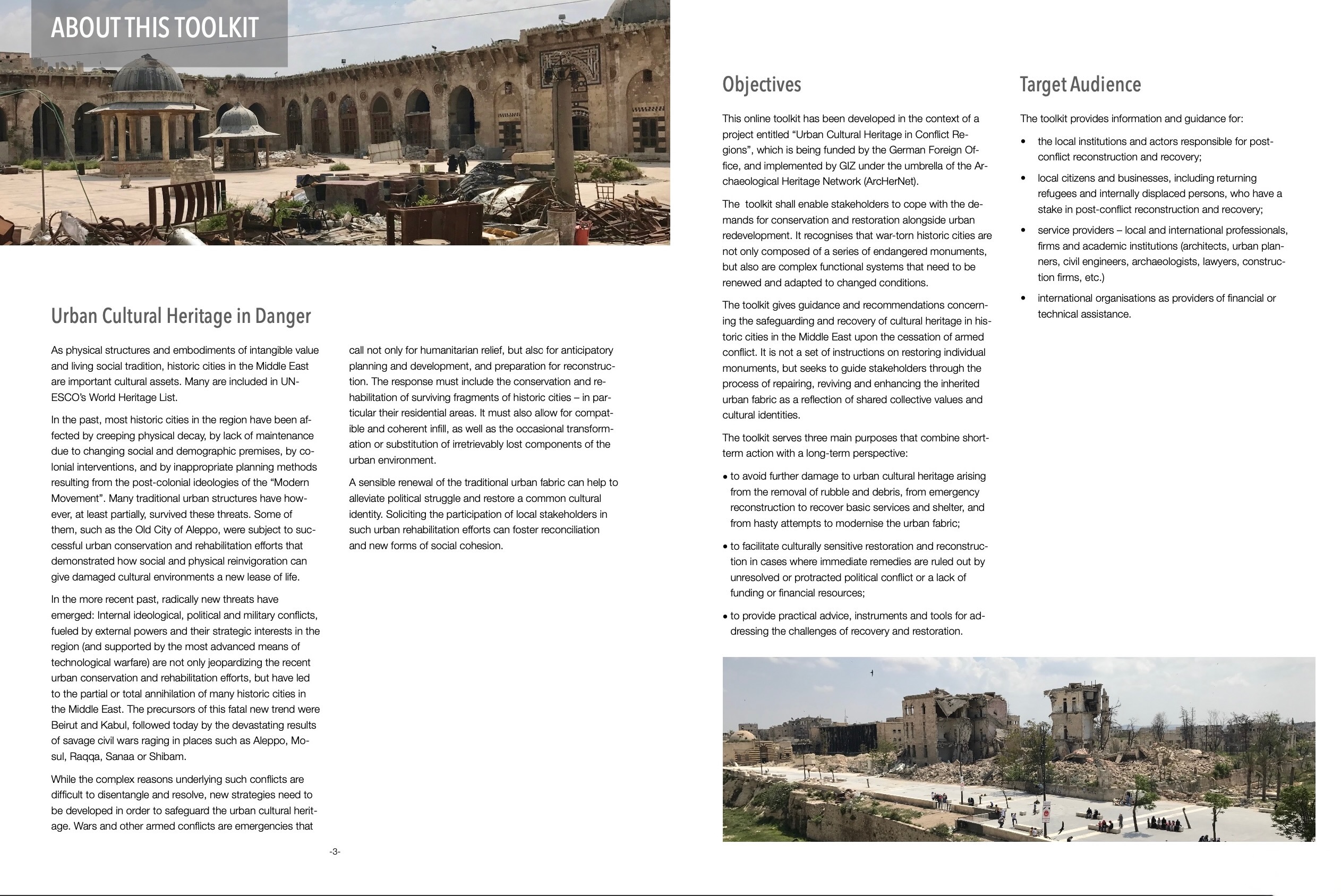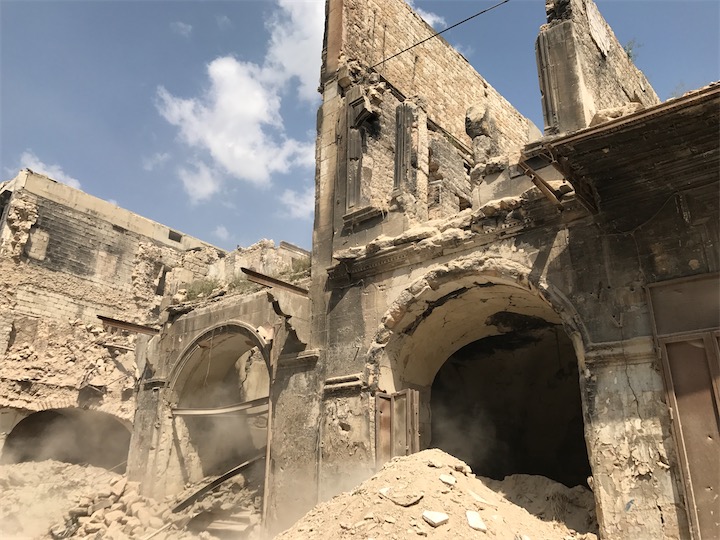
In 2017-2018, the Urban Cultural Heritage in Conflict Regions project, carried out by GIZ with support from the German Federal Foreign Office (AA) under the umbrella of the Archaeological Heritage Network - ArcHerNet, set out to create a toolkit to aid post-conflict recovery efforts. Collaborating with a diverse team of German, Syrian, and international experts, I was responsible for conceptualising and developing the toolkit. Upon its launch on June 12, 2019, in Berlin's Humboldt Graduate School celebration hall, I was eager to see its positive impact. Since then, the toolkit was online, hosted by the German Archaeological Institute (Deutsches Archäologisches Institut - DAI).
Broken Links
In the months and years that followed, my focus shifted to other pressing challenges in the ongoing Syrian conflict. Working to strengthen the resilience of Syrian civil society in diaspora and safeguard HLP rights of Syrian refugees and internally displaced persons, the toolkit's journey took a backseat. Handing it over to the German Archaeological Institute (DAI) for hosting on their website, I had hoped it would continue to serve its purpose. Recently, after retiring from my work at GIZ, I revisited the toolkit, realising its accessibility had been compromised. The original domain and URL was no longer functional, making it inaccessible.
Rebuilding and Reconstructing the Toolkit
I therefore took to the initiative to rebuild the toolkit based on a copy I had saved earlier. The reconstructed toolkit is now online on my website, albeit still work in progress.
For now, access is only available to interested users upon request through a password-protected page to ensure intellectual property rights are respected.
An E-book as Alternative Distribution Channel
I am also working on creating an ebook version of the toolkit. I hope that I will soon be able to make it available to interested users upon request.
Excerpt from the draft toolkit e-Book