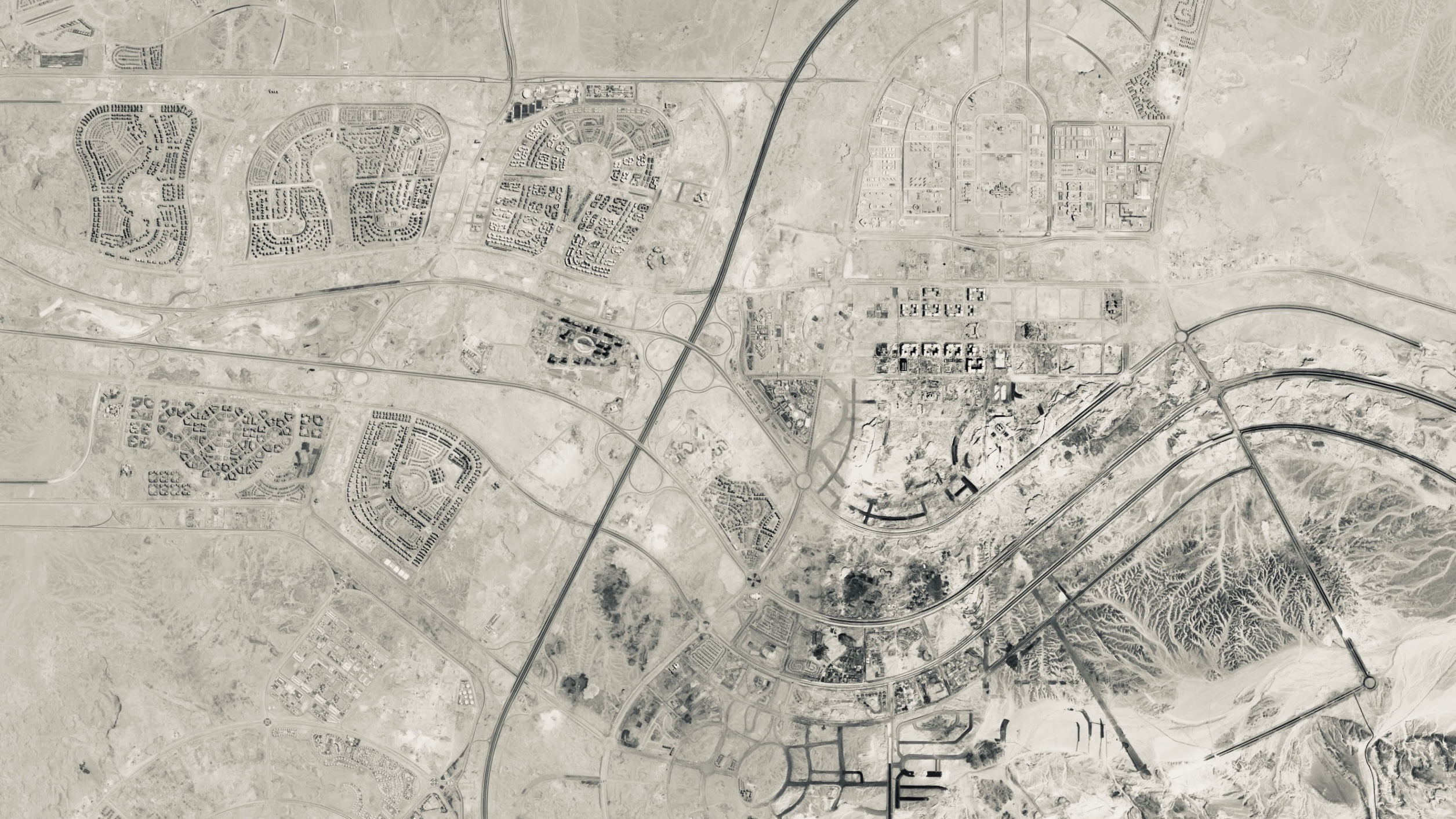
Back to Cairo for a short visit of a couple of days, after a long absence of ten years, I wanted to update myself on the New Administrative Capital that is being built in the desert some 40 km East from Cairo’s centre.
The grand design covers an area of 725 square kilometers. As the new seat of the government it provides space for all ministries, the parliament, and all embassies. It comprises a huge central business district, its own airport, a monorail and another opera house. At some point, 6.5 million people are to live there. Currently however only a few of the buildings are completed and fully functional, among them the compound of a new five-star luxury hotel.
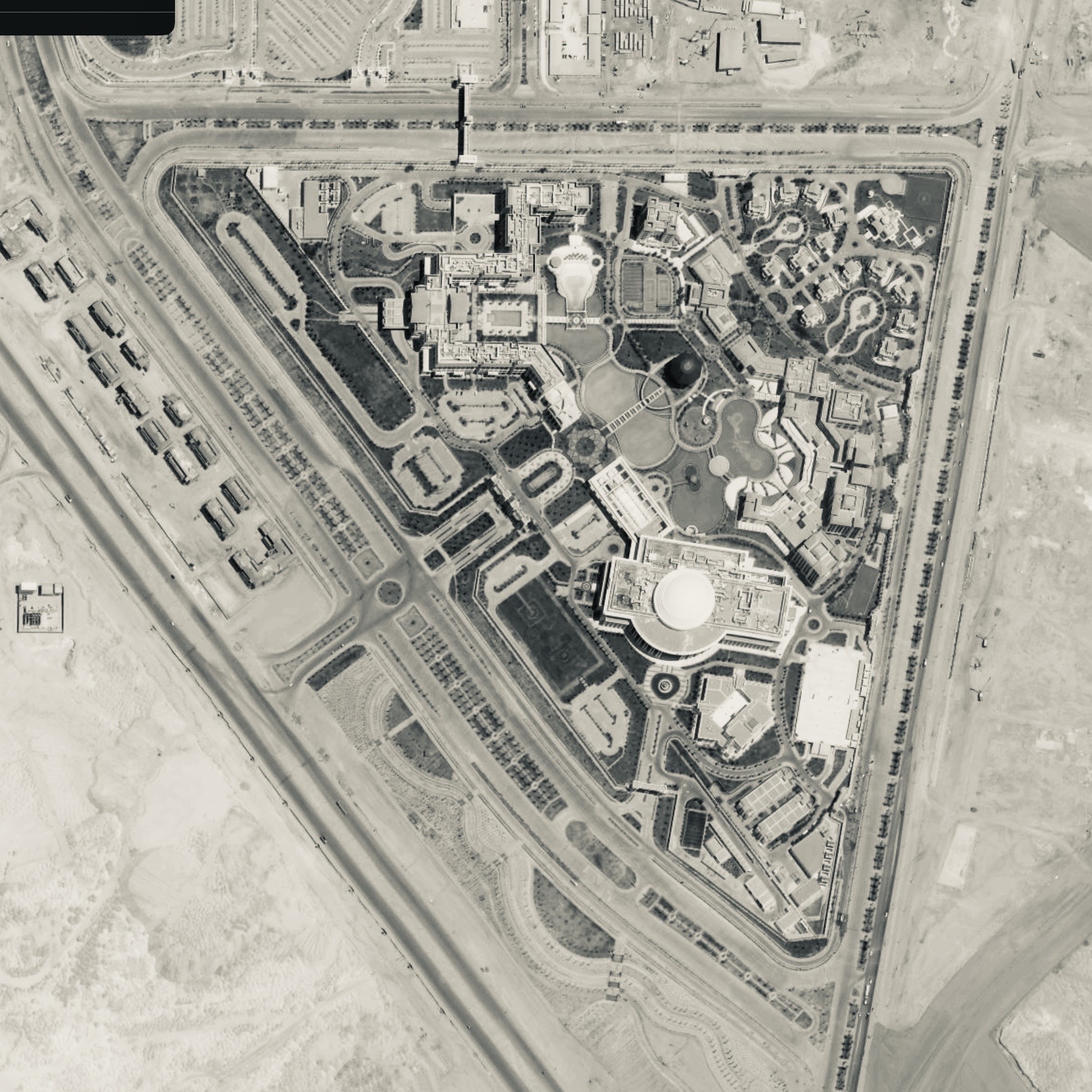
I learnt that the new capital will possibly remain fenced, as a huge gated government compound with its own management and administration. How this will work with the millions of people to live and work there upon its completion remains an open question.
“And what about the large numbers of support personal that are typical for Egyptian public administration, the “farash” serving tea or coffee in offices, guards, cleaners, gardeners and other workers?”
“For them housing in the New Capital that easily will cost 50,000 USD for a two-room apartment may not be affordable. Where will they live and how will they find access to their places of livelihood?”
The opening, originally already planned for end 2021, has repeatedly been postponed. Now it shall reportedly be inaugurated jointly with another grand project, [the new Grand Egyptian Museum](https://grandegyptianmuseum.org), for which planning started already in 2002.
Reading about the repeatedly postponed opening reminded me of my time in the General Organisation for Physical Planning – GOPP in the then Ministry of Housing, Utilities and New Communities in the 1980s. At that time, in a distant past, GOPP had planned a previous avatar of a New Capital, Sadat City, at the Cairo – Alexandria desert road.
Each summer in the three years of my assignment in Egypt preparations for moving the Ministry to Sadat City started, discussing floor plans and distribution of office space. The expectation was that the move would then happen in autumn, after the summer break. It however never happened.
Almost nobody in the Ministry and the organisation that had planned the new capital actually wanted to move there. The same was obviously the case with all other ministries and the government as a whole. It was somehow a rather special, but harmless and now historic example of the Egyptian deep state. In the end, Sadat City was converted into an industrial town that today dawns in the desert.
Already in 2015, my old friend and colleague David Sims published his book Egypt’s Desert Dreams: Development or Disaster. The book amply dismantled the myth that the cure to Egypt‘s population growth and housing needs lies in building new towns and sub-urban settlements in the country‘s deserts.
The New Administrative Capital seems however a completely new, more ambitious iteration of the New City and New Capital concept. It aims much higher, with monumental, almost pharaonic dimensions. And also the costs are of astronomical dimensions, summing up to 45 billion USD.
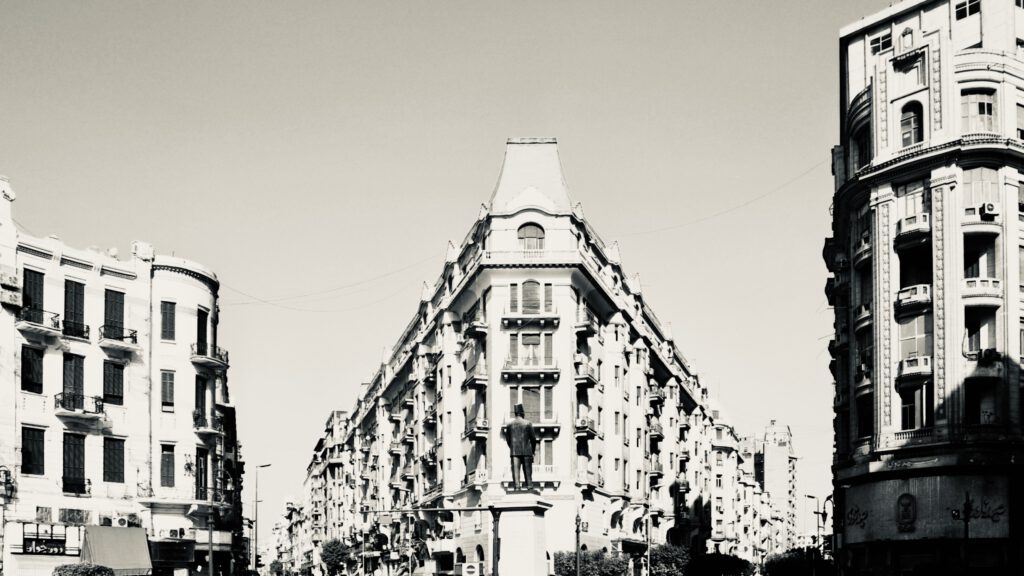
In the meantime, most of the rest of the city crumbles, sometimes glossed over with cosmetic measures such as the beautification of Cairo’s city centre around Midan Talaat Harb with its impressing Art Noveau buildings. Other important elements of the Cairo’s cityscape are threatened by other forms of inner-city real estate development and the government’s city modernisation policy.
Prominent examples include the ongoing and highly contested redevelopment of the Maspero Triangle. The area is a former slum located behind the iconic Radio Cairo building, close to the Nile and Midan Tahrir.
Another case is the
razing of large swaths of the City of the Dead.
The historic cemetery lies beneath the Mokattam cliffs and dates back to the seventh century.
Large sections are being demolished to build a flyover bridge connecting central Cairo to the New Administrative Capital.